
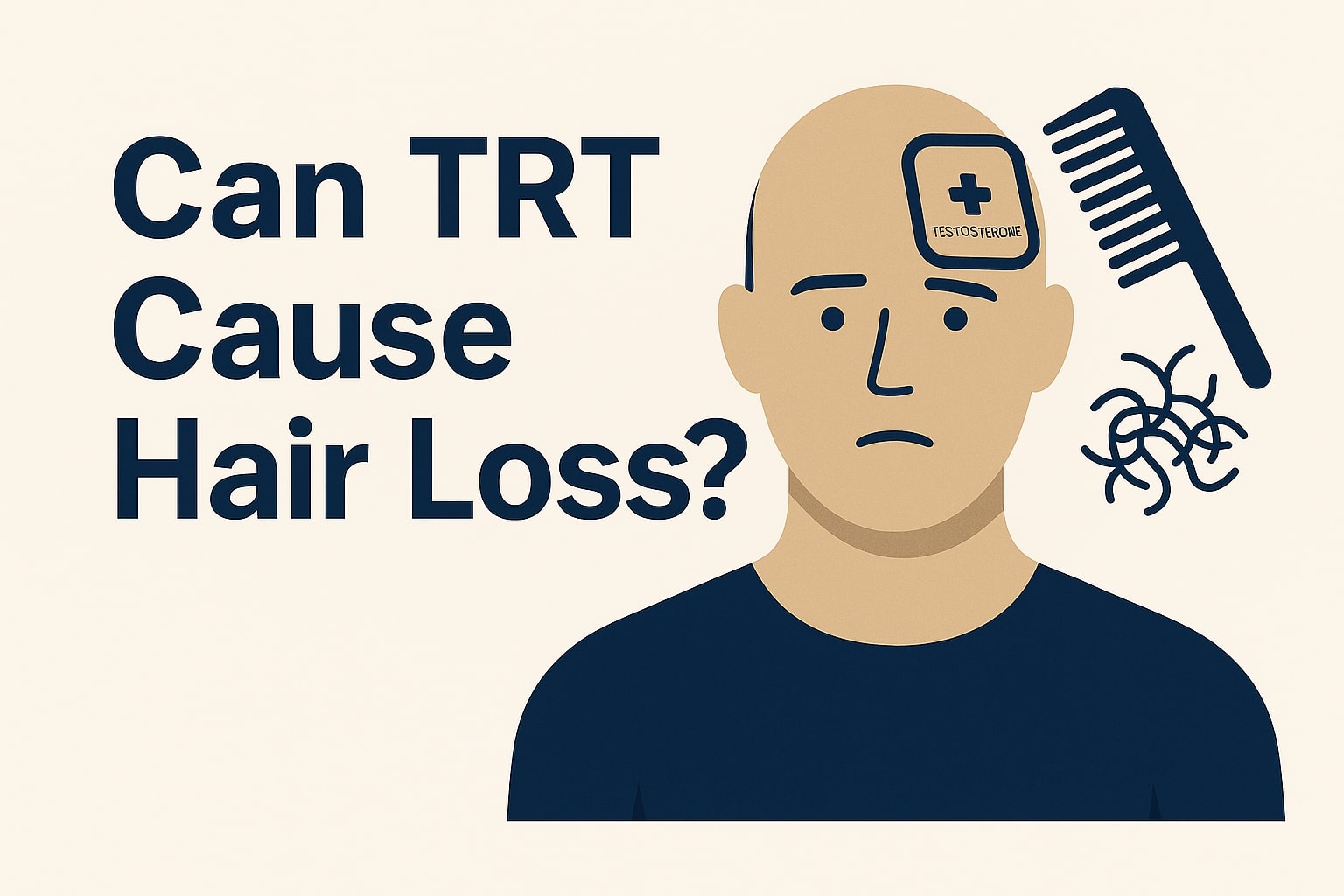
Testosterone replacement therapy (TRT) can cause hair loss, particularly in individuals who are genetically predisposed to male pattern baldness. This type of hair loss, known as androgenetic alopecia, typically presents as thinning at the temples and hairline (frontal scalp), similar to what is often called “male-pattern baldness”.
- Mechanism: TRT increases testosterone levels, which can be converted into dihydrotestosterone (DHT). DHT binds to hair follicles and can cause them to shrink, leading to hair thinning and loss, especially in those with a genetic sensitivity to DHT.
- Risk Factors: Not everyone on TRT will experience hair loss. The risk is higher in those with a family history or genetic predisposition to baldness.
- Incidence: Studies show that 5–17% of transgender men on TRT develop some hair loss in the first year, with most cases being mild. About 33% of trans men on testosterone experience some degree of hair thinning or balding.
- Prevention and Treatment: Medications such as finasteride (a DHT blocker) and minoxidil can help prevent or slow hair loss while on TRT.
In summary, TRT can accelerate hair loss in those genetically predisposed, but not everyone will be affected. The degree of hair loss varies, and treatments are available to help manage this side effect.
- https://www.folxhealth.com/library/how-testosterone-impacts-hair-growth-and-loss-facial-body-and-more
- https://pmc.ncbi.nlm.nih.gov/articles/PMC3380548/
- https://www.hshairclinic.co.uk/news/trt-hair-loss
- https://www.defymedical.com/blog/how-to-avoid-hair-loss-on-trt/
- https://kalondermatology.com/how-to-prevent-hair-loss-while-taking-testosterone/
- https://www.menshealth.com/health/a60370281/hair-loss-testosterone-replacement-therapy-connection-urologist-explains/
- https://www.hairdoctors.com.au/blog/does-testosterone-make-you-bald/
- https://www.mayoclinic.org/healthy-lifestyle/sexual-health/in-depth/testosterone-therapy/art-20045728
Understanding TRT (Testosterone Replacement Therapy)
What Is TRT?
TRT is a medical treatment for men with clinically low testosterone levels. Common delivery methods include:
- Injections (Testosterone Cypionate, Enanthate)
- Gels or creams
- Patches
- Oral formulations (e.g., Jatenzo)
Why Men Use It
- Combat fatigue, brain fog, and low sex drive
- Improve strength, recovery, and mental focus
- Stabilize mood and reduce depression
Forms of Testosterone Therapy
Each method has different effects on hormone levels—and potentially on hair health—due to how much DHT (dihydrotestosterone) is created.
How Hair Growth Works in Men
Hair Follicle Cycles
Hair grows in cycles:
- Anagen (growth phase)
- Catagen (transitional phase)
- Telogen (resting phase)
TRT and DHT affect how long hair stays in each phase.
Role of Genetics in Hair Loss
Male pattern baldness (androgenic alopecia) is mostly genetic. If it runs in your family, you’re more likely to experience it—with or without TRT.
Androgen Sensitivity Explained
Some men’s hair follicles are more sensitive to DHT, which binds to receptors in scalp follicles and shrinks them over time—leading to thinning and balding.
Can TRT Cause Hair Loss?
Testosterone, DHT, and Hair Follicles
TRT increases testosterone levels—but it also raises DHT, a byproduct that can accelerate hair loss in genetically predisposed men.
Scientific Evidence and Mechanisms
- Studies show DHT is the primary driver of hair miniaturization
- TRT boosts DHT by 10–40%, depending on dose and delivery
- Increased DHT = higher risk for male pattern baldness
Real-World Patient Experiences
Some men report noticeable shedding within weeks of starting TRT, while others experience no change. It varies based on genetics and dosage.
What Is DHT and Why Does It Matter?
Conversion of Testosterone to DHT
When testosterone enters the body, a portion is converted into dihydrotestosterone (DHT) by the 5-alpha reductase enzyme. While DHT is important for male development, it’s also closely linked to hair loss.
DHT’s Impact on Hair Follicles
DHT binds to androgen receptors in scalp hair follicles, particularly on the crown and temples. Over time, it causes:
- Miniaturization of hair follicles
- Shorter growth cycles
- Thinner, finer hairs
This leads to male pattern baldness in genetically sensitive men.
How TRT Can Increase DHT Levels
All forms of TRT raise testosterone, and some methods—especially injections—may increase DHT levels more significantly, which may speed up balding in susceptible individuals.
Who Is at Risk for Hair Loss on TRT?
Men with a Family History of Balding
If your father or grandfather experienced male pattern baldness, there’s a high chance you carry the same genetic sensitivity to DHT. TRT may accelerate this process.
Younger Men on TRT
Men in their 20s or early 30s may be more concerned with hair retention, and TRT during these years may trigger or worsen early-onset hair thinning if not properly managed.
High-Dose or Unmonitored TRT Users
Men using bodybuilding doses or undergoing TRT without medical supervision are more likely to experience rapid hair loss due to excessive DHT production.
Is TRT-Induced Hair Loss Permanent?
Reversibility Based on Genetics
If hair loss was already genetically “programmed,” TRT may unmask it sooner—and stopping therapy might not bring it back. If the loss is due to sudden hormonal shifts, regrowth may occur.
Stopping TRT and Hair Regrowth
- In some men, stopping TRT or reducing dosage can lead to stabilization or regrowth.
- However, if follicles are already miniaturized, recovery is limited.
Timeline for Hair Changes
- Hair loss may begin within weeks to months of starting TRT.
- Without intervention, the shedding can become progressive over time.
How to Prevent or Reduce Hair Loss on TRT
DHT Blockers (Finasteride, Dutasteride)
These medications inhibit the 5-alpha reductase enzyme, reducing the conversion of testosterone to DHT:
- Finasteride (Propecia): Blocks ~70% of DHT
- Dutasteride: Blocks ~90% of DHT (stronger, but more side effects)
Caution: Some men experience sexual side effects with DHT blockers.
Topical Treatments (Minoxidil, Ketoconazole)
- Minoxidil (Rogaine): Increases blood flow to the scalp and extends hair growth phases.
- Ketoconazole shampoo: Reduces scalp inflammation and may lower local DHT activity.
Both can be used alongside TRT and DHT blockers for a combined approach.
Lower-Dose TRT and Frequency Adjustments
Using:
- Lower testosterone doses
- SubQ injections (vs IM)
- Longer-acting esters
…may limit DHT spikes and reduce hair loss risk.
Safe Alternatives for Men Concerned About Hair Loss
Clomid and Enclomiphene
These are non-testosterone therapies that stimulate your body’s natural testosterone production without drastically raising DHT. They:
- Help preserve fertility
- Pose a lower hair loss risk
TRT with DHT Management
Combining TRT with:
- Finasteride/Dutasteride
- Minoxidil
- Ketoconazole
…can help men retain hair while enjoying TRT benefits.
Non-Hormonal Lifestyle Boosters
Improving:
- Sleep
- Diet
- Weight
- Vitamin D and zinc levels
…can mildly increase testosterone with minimal impact on hair.
Myths and Misconceptions About TRT and Hair Loss
“All Men on TRT Go Bald”
False. Only genetically predisposed men are likely to experience hair loss—and even then, it can often be managed.
“Hair Loss Is Immediate”
Hair loss from TRT is usually gradual, not immediate. It typically takes months of DHT exposure to notice visible thinning.
“TRT Is Worse Than Steroids”
TRT uses medically prescribed doses, while steroids involve massive hormone spikes. The hair loss risk is significantly lower with TRT when used responsibly.
FAQs About TRT and Hair Loss
Will TRT make me go bald faster?
Possibly—if you’re genetically prone to baldness. TRT can accelerate the process by increasing DHT.
Can I take finasteride with TRT?
Yes. Many men take Finasteride or Dutasteride alongside TRT to reduce DHT and protect hair.
Does every man on TRT lose hair?
No. Many men experience no hair loss at all, especially those without a family history of balding.
Will switching TRT methods help?
Yes. Gels or subcutaneous injections may create lower DHT levels compared to high-dose intramuscular shots.
Can DHT blockers affect libido?
In some men, yes. DHT plays a role in sexual function, so monitor changes and speak with your doctor.
What’s the best hair loss treatment for TRT users?
A combined approach of:
- Finasteride (oral or topical)
- Minoxidil
- Ketoconazole shampoo
- And, if necessary, adjusting your TRT dose or delivery
Conclusion: Does TRT Cause Hair Loss—What You Should Know Before Starting
So, can TRT cause hair loss? Yes—especially if you’re genetically predisposed and not using preventive strategies. TRT increases DHT, and DHT shrinks hair follicles in men with androgen sensitivity.
But here’s the good news: TRT-related hair loss can often be managed, slowed, or even prevented entirely with the right tools:
- Monitoring DHT levels
- Using blockers or topicals
- Adjusting your TRT plan
If keeping your hair is a top priority, discuss preventive treatment options with your doctor before starting TRT.