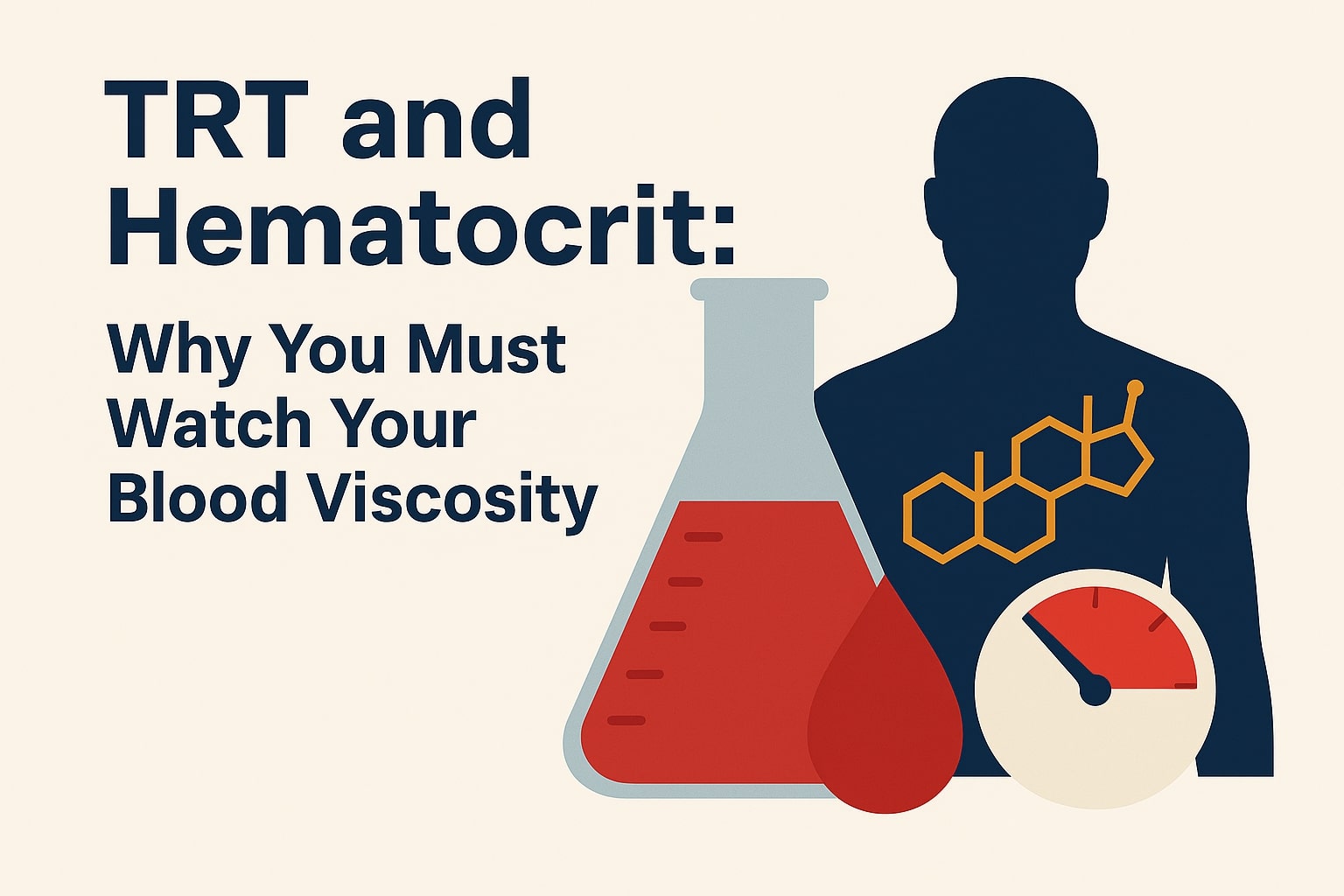
TRT and Hematocrit: Why You Must Watch Your Blood Viscosity

Testosterone Replacement Therapy (TRT) offers transformative benefits for men with hypogonadism—improving energy, libido, muscle mass, and mood. However, it’s not without risks. One of the most critical and often underappreciated side effects of TRT is its ability to elevate hematocrit levels, which directly affects blood viscosity and cardiovascular safety.

Whether you’re considering TRT or are already on it, understanding the relationship between testosterone and hematocrit is essential for long-term health.


What Is Hematocrit and Why Does It Matter?

Hematocrit is the proportion of your blood volume made up of red blood cells. It is expressed as a percentage. A normal hematocrit for men typically ranges from 38% to 50%.

When testosterone levels rise through TRT, they stimulate erythropoiesis—the production of red blood cells. While a modest increase in red cell count may improve oxygen delivery and endurance, too much can thicken the blood, creating a condition called erythrocytosis (1, 2).


Why Elevated Hematocrit Is Dangerous

1. Increased Blood Viscosity

As hematocrit rises, your blood becomes thicker, which:

  • Slows circulation
  • Increases resistance in blood vessels
  • Makes it easier for clots to form

This can impair organ perfusion and lead to cardiovascular strain (1, 7).

2. Thrombotic and Cardiovascular Risks

High hematocrit is associated with:

  • Venous thromboembolism (VTE)
  • Myocardial infarction (heart attack)
  • Stroke

Once hematocrit exceeds 52–54%, the risks become significant enough that most clinical guidelines advise reducing or stopping TRT (2, 8).


What the Research Shows

1. All TRT Forms Raise Hematocrit

Meta-analyses confirm that injectable testosterone formulations (e.g., enanthate, cypionate) cause the greatest and fastest increases in hematocrit compared to gels or patches (3, 5).

2. Prevalence of Erythrocytosis

  • Up to 50% of TRT patients may reach a hematocrit ≥46%
  • 5–10% exceed 54%, necessitating therapy modification or discontinuation (6)

3. Timeline

  • Hematocrit often rises sharply in the first year of TRT
  • Ongoing elevation may occur over time, making long-term monitoring critical (6, 3)

4. Biological Mechanism

Testosterone promotes red cell production by:

  • Increasing erythropoietin (EPO)—a hormone from the kidneys
  • Suppressing hepcidin, which regulates iron metabolism

These changes raise red cell mass, which boosts hematocrit and blood thickness (2).


Clinical Guidelines: Monitoring and Management

1. Blood Tests Are Non-Negotiable

  • Baseline hematocrit and hemoglobin levels should be recorded before starting TRT.
  • Follow-up labs are recommended at 3 months, 6 months, and then every 6–12 months (6).

2. Thresholds for Action

Hematocrit LevelClinical Response
< 50%Continue monitoring
50–52%Monitor closely; consider dose adjustment
52–54%Reduce dose or change formulation
> 54%Discontinue TRT or perform therapeutic phlebotomy

“Erythrocytosis, or elevated hematocrit, is a common side effect of testosterone therapy… Several guidelines recommend against starting TTh in patients presenting with elevated hematocrit at baseline or stopping TTh when its levels cannot be controlled.”
Endocrine Connections


Managing High Hematocrit

1. Dose Reduction

Decreasing the testosterone dose can slow or reverse hematocrit elevation.

2. Switch to a Different Delivery Method

Topical gels or patches generally raise hematocrit less than injections.

3. Therapeutic Phlebotomy

This procedure involves removing blood (similar to blood donation) to:

  • Reduce red cell mass
  • Lower hematocrit quickly
  • Relieve symptoms like headaches, fatigue, and blood pressure spikes

4. Lifestyle Adjustments

  • Stay well-hydrated to prevent blood thickening
  • Avoid excessive iron supplementation
  • Monitor for high blood pressure

Summary: Stay Safe, Stay Monitored

TRT offers real health benefits—but it also alters blood composition, particularly hematocrit. Elevated hematocrit increases blood viscosity, which can lead to serious cardiovascular events if unmanaged.

Regular blood testing is not optional; it’s a medical necessity. If hematocrit climbs too high, your provider must act—whether by adjusting the dose, switching delivery methods, or recommending phlebotomy.

Related Reading:


You can switch between modes anytime by simply typing the mode name (e.g., Article Mode, Blog Article + Image Mode, Custom Mode, Multilingual Mode).
Get LIFETIME ACCESS to My Private Prompt Library: https://buymeacoffee.com/mtspromptslibrary/e/236177
1️⃣ Translate this article into another language.
2️⃣ Generate images to match the article (blog-ready visuals).
3️⃣ Start a new SEO article
Similar Posts

Leave a Reply

Your email address will not be published. Required fields are marked *

TRT and Hematocrit: Why You Must Watch Your Blood Viscosity

Testosterone Replacement Therapy (TRT) offers transformative benefits for men with hypogonadism—improving energy, libido, muscle mass, and mood. However, it’s not without risks. One of the most critical and often underappreciated side effects of TRT is its ability to elevate hematocrit levels, which directly affects blood viscosity and cardiovascular safety.

Whether you’re considering TRT or are already on it, understanding the relationship between testosterone and hematocrit is essential for long-term health.


What Is Hematocrit and Why Does It Matter?

Hematocrit is the proportion of your blood volume made up of red blood cells. It is expressed as a percentage. A normal hematocrit for men typically ranges from 38% to 50%.

When testosterone levels rise through TRT, they stimulate erythropoiesis—the production of red blood cells. While a modest increase in red cell count may improve oxygen delivery and endurance, too much can thicken the blood, creating a condition called erythrocytosis (1, 2).


Why Elevated Hematocrit Is Dangerous

1. Increased Blood Viscosity

As hematocrit rises, your blood becomes thicker, which:

  • Slows circulation
  • Increases resistance in blood vessels
  • Makes it easier for clots to form

This can impair organ perfusion and lead to cardiovascular strain (1, 7).

2. Thrombotic and Cardiovascular Risks

High hematocrit is associated with:

  • Venous thromboembolism (VTE)
  • Myocardial infarction (heart attack)
  • Stroke

Once hematocrit exceeds 52–54%, the risks become significant enough that most clinical guidelines advise reducing or stopping TRT (2, 8).


What the Research Shows

1. All TRT Forms Raise Hematocrit

Meta-analyses confirm that injectable testosterone formulations (e.g., enanthate, cypionate) cause the greatest and fastest increases in hematocrit compared to gels or patches (3, 5).

2. Prevalence of Erythrocytosis

  • Up to 50% of TRT patients may reach a hematocrit ≥46%
  • 5–10% exceed 54%, necessitating therapy modification or discontinuation (6)

3. Timeline

  • Hematocrit often rises sharply in the first year of TRT
  • Ongoing elevation may occur over time, making long-term monitoring critical (6, 3)

4. Biological Mechanism

Testosterone promotes red cell production by:

  • Increasing erythropoietin (EPO)—a hormone from the kidneys
  • Suppressing hepcidin, which regulates iron metabolism

These changes raise red cell mass, which boosts hematocrit and blood thickness (2).


Clinical Guidelines: Monitoring and Management

1. Blood Tests Are Non-Negotiable

  • Baseline hematocrit and hemoglobin levels should be recorded before starting TRT.
  • Follow-up labs are recommended at 3 months, 6 months, and then every 6–12 months (6).

2. Thresholds for Action

Hematocrit LevelClinical Response
< 50%Continue monitoring
50–52%Monitor closely; consider dose adjustment
52–54%Reduce dose or change formulation
> 54%Discontinue TRT or perform therapeutic phlebotomy

“Erythrocytosis, or elevated hematocrit, is a common side effect of testosterone therapy… Several guidelines recommend against starting TTh in patients presenting with elevated hematocrit at baseline or stopping TTh when its levels cannot be controlled.”
Endocrine Connections


Managing High Hematocrit

1. Dose Reduction

Decreasing the testosterone dose can slow or reverse hematocrit elevation.

2. Switch to a Different Delivery Method

Topical gels or patches generally raise hematocrit less than injections.

3. Therapeutic Phlebotomy

This procedure involves removing blood (similar to blood donation) to:

  • Reduce red cell mass
  • Lower hematocrit quickly
  • Relieve symptoms like headaches, fatigue, and blood pressure spikes

4. Lifestyle Adjustments

  • Stay well-hydrated to prevent blood thickening
  • Avoid excessive iron supplementation
  • Monitor for high blood pressure

Summary: Stay Safe, Stay Monitored

TRT offers real health benefits—but it also alters blood composition, particularly hematocrit. Elevated hematocrit increases blood viscosity, which can lead to serious cardiovascular events if unmanaged.

Regular blood testing is not optional; it’s a medical necessity. If hematocrit climbs too high, your provider must act—whether by adjusting the dose, switching delivery methods, or recommending phlebotomy.

🔍 Related Reading:


You can switch between modes anytime by simply typing the mode name (e.g., Article Mode, Blog Article + Image Mode, Custom Mode, Multilingual Mode).
Get LIFETIME ACCESS to My Private Prompt Library: https://buymeacoffee.com/mtspromptslibrary/e/236177
1️⃣ Translate this article into another language.
2️⃣ Generate images to match the article (blog-ready visuals).
3️⃣ Start a new SEO article