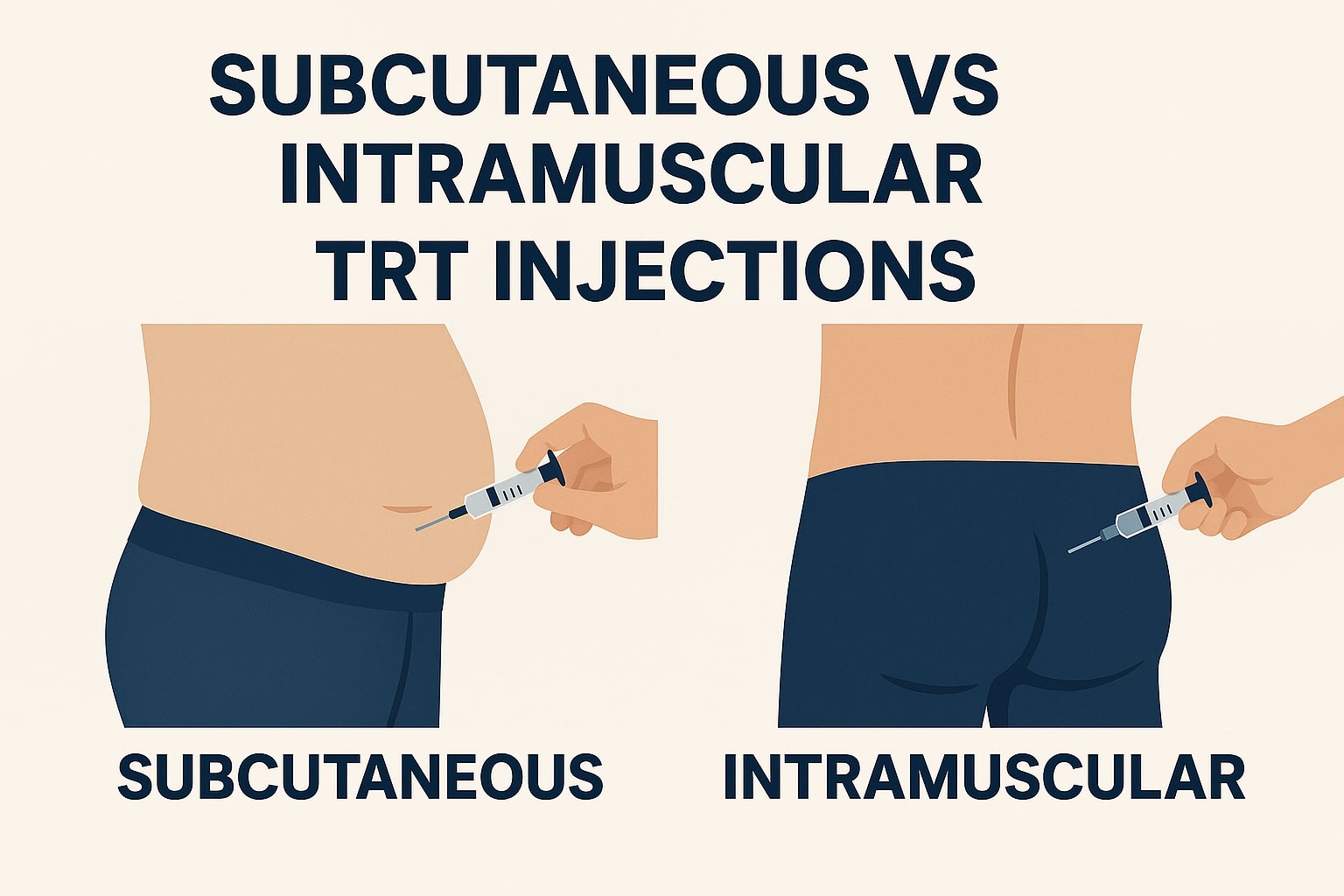
Subcutaneous vs Intramuscular TRT Injections: What’s Better for You?

Subcutaneous (SubQ) and intramuscular (IM) injections are both effective methods for administering testosterone replacement therapy (TRT), but they differ in comfort, convenience, and side effect profiles.

FeatureSubcutaneous (SubQ) InjectionsIntramuscular (IM) Injections
Where injectedFatty layer under the skin (abdomen, thigh)Deep into muscle (glute, thigh, deltoid)
Needle sizeSmaller, thinner needle; less painfulLarger, longer needle; can be more painful
Ease of self-injectionEasier to self-administer, see injection site easilyMore challenging, especially in gluteal region
FrequencyOften twice weekly or weeklyWeekly, biweekly, or monthly (depending on ester)
Hormone level stabilityMore stable levels, fewer peaks/troughsCan cause more fluctuation, especially with less frequent dosing
Side effectsLower risk of muscle damage, less scar tissue, fewer spikes in estrogen (E2), DHT, and hematocritMore risk of post-injection pain, bruising, muscle damage, and higher peaks/troughs
DosingMay require slightly lower dose for same effectTraditional dosing, well-studied
SafetyLess risk of hitting nerves or blood vesselsSlight risk of hitting nerves (e.g., sciatic) or blood vessels
Patient preferenceIncreasingly popular for ease and comfortLong-standing standard, still widely used

Key Points:

  • Efficacy: Both methods provide comparable testosterone levels and symptom relief when dosed appropriately.
  • Comfort & Convenience: SubQ injections are less painful, easier to self-administer, and cause less tissue trauma.
  • Side Effects: SubQ may result in fewer side effects such as estrogen spikes, high hematocrit, and DHT-related symptoms, likely due to more stable testosterone release.
  • Dosing: Some evidence suggests SubQ may achieve similar results with slightly lower doses.
  • Patient Acceptance: SubQ is increasingly favored for long-term therapy, especially for those self-injecting at home.

In summary:
Subcutaneous injections are as effective as intramuscular injections for TRT, with added benefits of comfort, ease, and potentially fewer side effects. IM injections remain a reliable, well-established option, but SubQ is now preferred by many patients and providers, especially for self-administration and long-term therapy. The best choice depends on your preference, response, and medical advice.

  1. https://www.optimale.co.uk/articles/subcutaneous-testosterone-injection/
  2. https://pmc.ncbi.nlm.nih.gov/articles/PMC9006970/
  3. https://academic.oup.com/jcem/article/102/7/2349/3098651
  4. https://www.folxhealth.com/library/hrt-subcutaneous-intramuscular-injections
  5. https://alphahormones.com/trt-subq-vs-im-differences/trt-subq-vs-im-differences/
  6. https://alphahormones.com/why-subcutaneous-over-intramuscular-testosterone-injections/why-subcutaneous-over-intramuscular-testosterone-injections/
  7. https://pubmed.ncbi.nlm.nih.gov/34694927/
  8. https://www.mayoclinic.org/drugs-supplements/testosterone-intramuscular-route-subcutaneous-route/description/drg-20095183

Understanding Testosterone Replacement Therapy (TRT)

TRT is prescribed to restore healthy testosterone levels in men with clinically low T. While gels, patches, and pellets are available, injections offer the most consistent and potent results.

The route of administration significantly impacts:

  • Hormone stability
  • Side effects
  • Comfort and ease of injection
  • Long-term adherence

Basics of TRT Injection Routes

There are two primary injection routes:

  • Intramuscular (IM): Injection deep into a muscle
  • Subcutaneous (SubQ): Injection into the fatty tissue under the skin

Both deliver testosterone into the bloodstream, but the speed and smoothness of hormone absorption differ.


What Are Intramuscular TRT Injections?

IM injections have been the standard in TRT for decades.

Key Points:

  • Administered into large muscles (glutes, deltoids, thighs)
  • Requires longer needles (1–1.5 inches, 22–25 gauge)
  • Absorbs testosterone more rapidly

Pros:

  • Well-researched and long-standing method
  • Rapid uptake in some esters

Cons:

  • More painful, especially for lean or sensitive individuals
  • Can cause soreness and post-injection bleeding

What Are Subcutaneous TRT Injections?

SubQ injections are a newer approach but gaining widespread acceptance.

Key Points:

  • Administered into fatty tissue, typically abdomen or thigh
  • Uses shorter, thinner needles (5/8 inch, 27–29 gauge)
  • Slower and more even absorption

Pros:

  • Less painful
  • Fewer complications at the injection site
  • Easier for self-administration

Cons:

  • Can cause temporary lumps or mild irritation
  • Not all doctors are yet familiar or comfortable prescribing SubQ

Absorption Differences: SubQ vs IM

SubQ injections release testosterone more gradually, resulting in:

  • Fewer hormonal spikes and troughs
  • More stable mood and energy levels
  • Lower estradiol conversion

IM injections release hormones faster, which may:

  • Provide a more “aggressive” effect short-term
  • Cause more fluctuation in blood levels

Pain, Comfort, and Needle Size Comparison

Injection TypeNeedle GaugePain LevelComfort
Intramuscular22–25Moderate to highLess comfortable
Subcutaneous27–29LowHighly comfortable

Most users transitioning to SubQ injections report significantly less pain and anxiety, especially when self-injecting.


Side Effects Comparison: Subcutaneous vs Intramuscular

Both methods can deliver results, but they differ in side effects:

  • IM Risks: Soreness, bleeding, post-injection pain, inflammation
  • SubQ Risks: Occasional bumps or nodules under the skin

SubQ injections may lower the likelihood of:

  • Hematocrit elevation
  • Estrogen spikes
  • Acne and gynecomastia

Frequency and Dosing Flexibility

SubQ injections pair well with daily or twice weekly micro-dosing, as they are easier to perform frequently and reduce side effects.

IM injections are often administered:

  • Weekly or every 5 days
  • May be more effective for larger, less frequent doses

Clinical Research and Evidence-Based Insights

Studies have shown that SubQ TRT:

  • Maintains total testosterone and free testosterone levels
  • Produces fewer side effects
  • Improves patient adherence

A clinical study published in Journal of Clinical Endocrinology & Metabolism confirmed no significant differences in efficacy between SubQ and IM, but better patient comfort with SubQ.


What Do TRT Experts and Clinics Recommend?

The Australian TRT Clinic increasingly supports SubQ injections for:

  • Beginner TRT patients
  • Those experiencing IM injection pain
  • Men preferring daily micro-dosing

However, many long-term users still prefer IM due to habit, familiarity, or ease of use with larger dosages.


Personal Preference and Patient Experience

Real TRT Users Say:

  • “SubQ was a game changer—no pain, no mood swings.”
  • “IM gave me a quicker boost, but I hated the injection days.”
  • “I switched from IM to SubQ after reading clinic blogs—won’t go back.”

Transitioning Between IM and SubQ Injections

Switching routes is safe if:

  • You adjust your injection volume
  • You monitor symptoms and labs closely
  • You consult a provider for personalized titration

Signs you may benefit from switching:

  • Injection site pain or bruising
  • Mood instability
  • Anxiety or estrogen-related side effects

Self-Injection Practicality: Which Is Easier?

FeatureSubQIM
Ease for beginners✅ Easier❌ Harder
Needle phobia✅ Preferred❌ Less ideal
At-home setup✅ Minimal❌ Needs more precision

SubQ is a favorite for those who want autonomy and simplicity.


TRT Injection Technique: Step-by-Step for Each Method

SubQ:

  1. Use a 29-gauge insulin syringe
  2. Pinch the skin around the abdomen
  3. Inject at a 90-degree angle
  4. Inject slowly and apply light pressure after

IM:

  1. Use a 1.5” 23-gauge needle
  2. Inject into the outer thigh or glute
  3. Push slowly and aspirate (if advised)
  4. Withdraw and massage area lightly

Monitoring Results and Adjusting Your Protocol

Whichever method you choose, it’s critical to track:

  • Total and free testosterone
  • Estradiol and hematocrit
  • Symptoms (fatigue, libido, mood)

Use a journal or TRT tracking app and consult a clinic like this one to guide adjustments.


FAQs: Subcutaneous vs Intramuscular TRT

1. Is SubQ as effective as IM for TRT?
Yes. Most studies confirm equal efficacy when properly dosed.

2. Does SubQ reduce estrogen conversion?
It may result in less aromatization due to smoother hormone release.

3. Can I inject SubQ daily?
Yes—SubQ is ideal for daily micro-dosing due to lower discomfort.

4. Is IM better for bodybuilding results?
Not necessarily. Results depend more on hormone levels than delivery method.

5. Can I switch between IM and SubQ freely?
Yes, with your provider’s guidance and dose adjustment.

6. Are SubQ injections more affordable?
Yes, shorter and thinner needles are typically cheaper.


Conclusion: Choosing the Best TRT Injection Route for You

Both subcutaneous and intramuscular injections are effective. However:

  • Choose SubQ for comfort, stability, and ease.
  • Stick with IM if you prefer traditional methods or higher-volume dosing.

The right path depends on your symptoms, blood work, lifestyle, and comfort level. Always consult an experienced provider like the Australian TRT Clinic to find your best match.
Similar Posts

Leave a Reply

Your email address will not be published. Required fields are marked *

Subcutaneous vs Intramuscular TRT Injections: What’s Better for You?

Subcutaneous (SubQ) and intramuscular (IM) injections are both effective methods for administering testosterone replacement therapy (TRT), but they differ in comfort, convenience, and side effect profiles.

FeatureSubcutaneous (SubQ) InjectionsIntramuscular (IM) Injections
Where injectedFatty layer under the skin (abdomen, thigh)Deep into muscle (glute, thigh, deltoid)
Needle sizeSmaller, thinner needle; less painfulLarger, longer needle; can be more painful
Ease of self-injectionEasier to self-administer, see injection site easilyMore challenging, especially in gluteal region
FrequencyOften twice weekly or weeklyWeekly, biweekly, or monthly (depending on ester)
Hormone level stabilityMore stable levels, fewer peaks/troughsCan cause more fluctuation, especially with less frequent dosing
Side effectsLower risk of muscle damage, less scar tissue, fewer spikes in estrogen (E2), DHT, and hematocritMore risk of post-injection pain, bruising, muscle damage, and higher peaks/troughs
DosingMay require slightly lower dose for same effectTraditional dosing, well-studied
SafetyLess risk of hitting nerves or blood vesselsSlight risk of hitting nerves (e.g., sciatic) or blood vessels
Patient preferenceIncreasingly popular for ease and comfortLong-standing standard, still widely used

Key Points:

  • Efficacy: Both methods provide comparable testosterone levels and symptom relief when dosed appropriately.
  • Comfort & Convenience: SubQ injections are less painful, easier to self-administer, and cause less tissue trauma.
  • Side Effects: SubQ may result in fewer side effects such as estrogen spikes, high hematocrit, and DHT-related symptoms, likely due to more stable testosterone release.
  • Dosing: Some evidence suggests SubQ may achieve similar results with slightly lower doses.
  • Patient Acceptance: SubQ is increasingly favored for long-term therapy, especially for those self-injecting at home.

In summary:
Subcutaneous injections are as effective as intramuscular injections for TRT, with added benefits of comfort, ease, and potentially fewer side effects. IM injections remain a reliable, well-established option, but SubQ is now preferred by many patients and providers, especially for self-administration and long-term therapy. The best choice depends on your preference, response, and medical advice.

  1. https://www.optimale.co.uk/articles/subcutaneous-testosterone-injection/
  2. https://pmc.ncbi.nlm.nih.gov/articles/PMC9006970/
  3. https://academic.oup.com/jcem/article/102/7/2349/3098651
  4. https://www.folxhealth.com/library/hrt-subcutaneous-intramuscular-injections
  5. https://alphahormones.com/trt-subq-vs-im-differences/trt-subq-vs-im-differences/
  6. https://alphahormones.com/why-subcutaneous-over-intramuscular-testosterone-injections/why-subcutaneous-over-intramuscular-testosterone-injections/
  7. https://pubmed.ncbi.nlm.nih.gov/34694927/
  8. https://www.mayoclinic.org/drugs-supplements/testosterone-intramuscular-route-subcutaneous-route/description/drg-20095183

Understanding Testosterone Replacement Therapy (TRT)

TRT is prescribed to restore healthy testosterone levels in men with clinically low T. While gels, patches, and pellets are available, injections offer the most consistent and potent results.

The route of administration significantly impacts:

  • Hormone stability
  • Side effects
  • Comfort and ease of injection
  • Long-term adherence

Basics of TRT Injection Routes

There are two primary injection routes:

  • Intramuscular (IM): Injection deep into a muscle
  • Subcutaneous (SubQ): Injection into the fatty tissue under the skin

Both deliver testosterone into the bloodstream, but the speed and smoothness of hormone absorption differ.


What Are Intramuscular TRT Injections?

IM injections have been the standard in TRT for decades.

Key Points:

  • Administered into large muscles (glutes, deltoids, thighs)
  • Requires longer needles (1–1.5 inches, 22–25 gauge)
  • Absorbs testosterone more rapidly

Pros:

  • Well-researched and long-standing method
  • Rapid uptake in some esters

Cons:

  • More painful, especially for lean or sensitive individuals
  • Can cause soreness and post-injection bleeding

What Are Subcutaneous TRT Injections?

SubQ injections are a newer approach but gaining widespread acceptance.

Key Points:

  • Administered into fatty tissue, typically abdomen or thigh
  • Uses shorter, thinner needles (5/8 inch, 27–29 gauge)
  • Slower and more even absorption

Pros:

  • Less painful
  • Fewer complications at the injection site
  • Easier for self-administration

Cons:

  • Can cause temporary lumps or mild irritation
  • Not all doctors are yet familiar or comfortable prescribing SubQ

Absorption Differences: SubQ vs IM

SubQ injections release testosterone more gradually, resulting in:

  • Fewer hormonal spikes and troughs
  • More stable mood and energy levels
  • Lower estradiol conversion

IM injections release hormones faster, which may:

  • Provide a more “aggressive” effect short-term
  • Cause more fluctuation in blood levels

Pain, Comfort, and Needle Size Comparison

Injection TypeNeedle GaugePain LevelComfort
Intramuscular22–25Moderate to highLess comfortable
Subcutaneous27–29LowHighly comfortable

Most users transitioning to SubQ injections report significantly less pain and anxiety, especially when self-injecting.


Side Effects Comparison: Subcutaneous vs Intramuscular

Both methods can deliver results, but they differ in side effects:

  • IM Risks: Soreness, bleeding, post-injection pain, inflammation
  • SubQ Risks: Occasional bumps or nodules under the skin

SubQ injections may lower the likelihood of:

  • Hematocrit elevation
  • Estrogen spikes
  • Acne and gynecomastia

Frequency and Dosing Flexibility

SubQ injections pair well with daily or twice weekly micro-dosing, as they are easier to perform frequently and reduce side effects.

IM injections are often administered:

  • Weekly or every 5 days
  • May be more effective for larger, less frequent doses

Clinical Research and Evidence-Based Insights

Studies have shown that SubQ TRT:

  • Maintains total testosterone and free testosterone levels
  • Produces fewer side effects
  • Improves patient adherence

A clinical study published in Journal of Clinical Endocrinology & Metabolism confirmed no significant differences in efficacy between SubQ and IM, but better patient comfort with SubQ.


What Do TRT Experts and Clinics Recommend?

The Australian TRT Clinic increasingly supports SubQ injections for:

  • Beginner TRT patients
  • Those experiencing IM injection pain
  • Men preferring daily micro-dosing

However, many long-term users still prefer IM due to habit, familiarity, or ease of use with larger dosages.


Personal Preference and Patient Experience

Real TRT Users Say:

  • “SubQ was a game changer—no pain, no mood swings.”
  • “IM gave me a quicker boost, but I hated the injection days.”
  • “I switched from IM to SubQ after reading clinic blogs—won’t go back.”

Transitioning Between IM and SubQ Injections

Switching routes is safe if:

  • You adjust your injection volume
  • You monitor symptoms and labs closely
  • You consult a provider for personalized titration

Signs you may benefit from switching:

  • Injection site pain or bruising
  • Mood instability
  • Anxiety or estrogen-related side effects

Self-Injection Practicality: Which Is Easier?

FeatureSubQIM
Ease for beginners✅ Easier❌ Harder
Needle phobia✅ Preferred❌ Less ideal
At-home setup✅ Minimal❌ Needs more precision

SubQ is a favorite for those who want autonomy and simplicity.


TRT Injection Technique: Step-by-Step for Each Method

SubQ:

  1. Use a 29-gauge insulin syringe
  2. Pinch the skin around the abdomen
  3. Inject at a 90-degree angle
  4. Inject slowly and apply light pressure after

IM:

  1. Use a 1.5” 23-gauge needle
  2. Inject into the outer thigh or glute
  3. Push slowly and aspirate (if advised)
  4. Withdraw and massage area lightly

Monitoring Results and Adjusting Your Protocol

Whichever method you choose, it’s critical to track:

  • Total and free testosterone
  • Estradiol and hematocrit
  • Symptoms (fatigue, libido, mood)

Use a journal or TRT tracking app and consult a clinic like this one to guide adjustments.


FAQs: Subcutaneous vs Intramuscular TRT

1. Is SubQ as effective as IM for TRT?
Yes. Most studies confirm equal efficacy when properly dosed.

2. Does SubQ reduce estrogen conversion?
It may result in less aromatization due to smoother hormone release.

3. Can I inject SubQ daily?
Yes—SubQ is ideal for daily micro-dosing due to lower discomfort.

4. Is IM better for bodybuilding results?
Not necessarily. Results depend more on hormone levels than delivery method.

5. Can I switch between IM and SubQ freely?
Yes, with your provider’s guidance and dose adjustment.

6. Are SubQ injections more affordable?
Yes, shorter and thinner needles are typically cheaper.


Conclusion: Choosing the Best TRT Injection Route for You

Both subcutaneous and intramuscular injections are effective. However:

  • Choose SubQ for comfort, stability, and ease.
  • Stick with IM if you prefer traditional methods or higher-volume dosing.

The right path depends on your symptoms, blood work, lifestyle, and comfort level. Always consult an experienced provider like the Australian TRT Clinic to find your best match.